
Understanding Window Drip Moulding
What Is a Drip Mould?
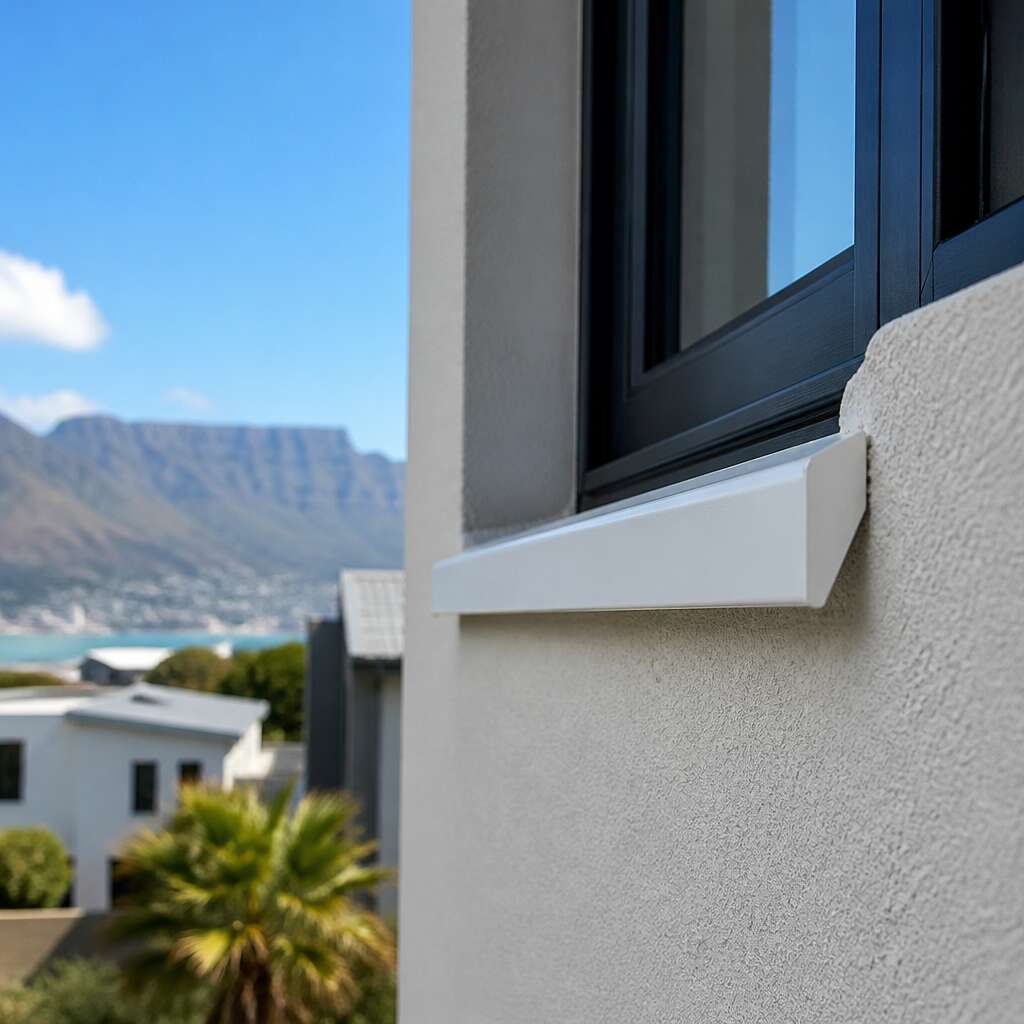
Rainwater clings to surfaces. That single physical fact explains why a window sill without a drip mould will eventually push moisture backward, under the frame, and into the wall. A drip mould is a groove or projecting lip cut into the underside of the sill. When water reaches that break, surface tension collapses, and the droplet drops cleanly away.
For window drip moulding cape town properties, winter fronts drive rain horizontally against the facade. The mould does not rely on sealants. It uses geometry to break the path of water before it reaches vulnerable joints. A few millimetres of correctly positioned channel decides whether a wall stays dry or begins to harbour damp.
The visual difference between a sill with a mould and one without is subtle. The performance difference is significant. Window drip moulding cape town installers know that this small detail carries most of the weatherproofing load.
How Drip Moulds Work to Divert Water
Driving rain in Cape Town creates a hydrostatic pressure against the facade. A correctly positioned drip mould converts that pressure into a clean release at the undercut. The groove acts as a capillary break, severing the adhesive bond between the water film and the sill surface. Water then falls under gravity, never reaching the frame joint.
For effective window drip moulding cape town, the geometry matters more than the material. The channel must be deep enough to break surface tension completely, and the lip must project past the wall plane. When those dimensions are correct, the mould performs silently.
- The water film adheres to the sill.
- The groove collapses the surface tension.
- The droplet drops cleanly.
That sequence works without sealants or maintenance. It is a passive defence, yet many buildings fail because the mould is painted over or cut flush!
Common Problems Caused by Missing or Faulty Drip Moulds
Of all defects I inspect, a failed or missing drip mould ranks among the most understated. The damage is slow, hidden behind paint, until timber sills rot or interior walls show tide marks. It simply stops breaking water surface tension, allowing moisture to creep into the frame joint.
The result is a familiar sequence:
- Timber frames swell, warp, and decay.
- Aluminium corrodes where water pools.
- Interior plaster blisters, often mistaken for rising damp.
For window drip moulding cape town, driving north-west storms amplify the risk. Water drives sideways, and without a proper undercut, it finds every gap. I have seen brand new installations fail within two seasons because the drip was omitted. Homeowners rarely connect the cause until the damage is visible. By then, the mould is forgotten. The fix is always simpler than the repair! A correctly fitted window drip moulding cape town detail would have prevented all of it.
Signs That Your Drip Mould Needs Replacement
A drip mould rarely announces its failure. The first sign is often a faint watermark on the sill’s underside, appearing long before any interior damage. I usually check the sealant bead first. When it has cracked and pulled away from the joint, the mould’s protective edge is already compromised.
Look for these warning signs on the profile itself:
- Hairline fractures running lengthwise along the mould
- A blunted or rounded undercut, often caused by overpainting
- Rust or corrosion staining beneath the metal profile
Each of these points to a loss of the sharp, continuous edge that breaks water tension. For any window drip moulding cape town installation, a damaged profile means the sealant is doing all the work. That never lasts! The mould should be replaced before moisture finds the frame joint, because once it does, the repair costs climb quickly.
Relevant Building Standards in Cape Town
Cape Town’s wind driven winter rain exposes poor window detailing faster than any other South African climate. SANS 10400 Part H, the National Building Regulation for waterproofing, sets the legal baseline for any window drip moulding cape town property requires. The standard demands a projecting profile that sheds water clear of the wall face, with a smooth underside to interrupt capillary action.
Inspectors examine three compliance points:
- The mould must project at least 15 mm beyond the wall face
- The undercut groove must run continuously along the full sill length
- Coastal homes need corrosion resistant profiles to survive salt laden air
Many older Cape Town buildings predate these rules entirely. When I check a window drip moulding cape town installation, I compare the existing profile against current SANS specifications rather than assuming a like for like replacement will pass inspection!
Benefits of Installing Drip Moulding on Cape Town Windows
Preventing Moisture Damage and Damp Walls
Cape Town’s winter rainfall is relentless. A correctly installed window drip moulding cape town solution channels water away before it ever touches your walls. This simple deflection prevents capillary rise and lateral seepage, which are the primary drivers of damp patches.
The payoff is structural. Without constant moisture, plaster stays intact and paint doesn’t blister. I have seen homes where a single missing mould caused years of hidden rot.
- Reduced internal humidity
- No salt efflorescence on brickwork
- Lower maintenance costs
That last point matters. Damp walls are expensive to fix. Drip moulding stops the problem at the source.
Enhancing Thermal Insulation and Energy Efficiency
Window heat loss accounts for 25% of residential energy waste. A dry window cavity changes that equation. Installing window drip moulding cape town keeps framing and sills free of moisture, preserving the R value of insulation. Wet fibreglass loses half its thermal resistance.
- Prevents moisture from degrading cavity insulation
- Reduces cold bridging around the window reveal
- Lowers heating requirements throughout winter
Water is a thermal bridge. Drip moulding severs that pathway. Indoor temperatures stay consistent, and heating systems cycle less often. That is energy efficiency achieved through a passive architectural detail.
Complementing Cape Town Architectural Styles
Cape Town’s architectural identity is a study in contrasts. The ornate curves of Cape Dutch gables sit beside stark modernist boxes, and Victorian cottages line streets where new glass facades rise. What unites them is the need to manage winter rain. A window drip moulding cape town fits into this landscape without visual noise. It preserves the line of a heritage sill and disappears against a contemporary frame.
That discretion is important. Heritage approval processes often reject changes that alter a building’s character. Drip moulding, however, works within existing profiles. It does not extend the reveal or interrupt the facade’s rhythm. For modern homes, the benefit is equally clear. Recessed windows, a common design choice, channel water straight onto the wall below. The moulding redirects that flow, keeping the clean exterior intact.
Boosting Property Value and Curb Appeal
Water streaking on a facade is the first thing buyers mention after a viewing. It reads as neglect, even when the interior is flawless. A window drip moulding cape town removes that visual clue, helping a property present as meticulously maintained. The cost of the profile is modest; the impression it creates is not.
Consider what the profile actually protects:
- Paint systems around windows, which fail early when water sits on the substrate.
- Masonry below the sill, where efflorescence forms after repeated wetting.
- The sealant joint around the frame, which is costly to repair once it degrades.
Buyers often make their offer decisions from the pavement. A clean exterior, free of water tracks, supports the asking price more reliably than any interior renovation.
Materials and Design Options for Drip Moulds
Aluminium vs. UPVC Drip Moulds
Choosing between aluminium and UPVC for window drip moulding Cape Town often comes down to how each material copes with the salty coastal air. I have seen powder coated aluminium hold its edge for decades, resisting corrosion and maintaining a crisp, slim profile. However, aluminium conducts heat, which can affect energy efficiency unless you add a thermal break.
UPVC, by contrast, offers better insulation and requires almost no upkeep. It does not warp as easily in the Cape’s intense summer sun, but its thicker profiles can look bulky on heritage style homes. For a quick comparison:
- Aluminium: sharper lines, higher strength, but needs quality coating
- UPVC: energy efficient, lightweight, and more forgiving on a budget
Design options also differ. Aluminium allows custom colours and slim sightlines, while UPVC comes in woodgrain finishes that suit cottage aesthetics. Your choice impacts both weather resistance and the overall look of the window drip moulding Cape Town property owners ultimately prefer.
Custom Profiles and Profiles for Different Window Types
Standard off the shelf drip moulds rarely align with the variety of window openings found in Cape Town. For window drip moulding Cape Town properties often need custom profiles, particularly where sills are curved or reveals are deep. I have watched installations fail because the profile never matched the window type.
A sliding sash behaves differently from a casement. Water runoff speed changes with the window design, so the profile must respond in kind. Consider these profile options:
- Cranked profiles for curved sills
- Extended lip profiles for wide masonry reveals
- Zero reveal profiles for flush modern frames
Each variation changes how water breaks away from the building face. A profile suited to a Victorian bay window will not suit a modern aluminium slider. Matching the profile to the window type matters more than material choice alone.
Powder Coating and Colour Matching
Powder coating does more than change the shade of a drip mould. The finish determines how the profile endures Cape Town’s coastal air, where salt-laden wind attacks poorly sealed edges. A quality polyester powder coat, baked at the correct temperature, forms a dense barrier that resists chipping during installation. I have seen touch-up paint fail where the factory finish held for decades.
Colour matching presents a separate challenge. Anodised finishes give a metallic depth that powder coating cannot replicate, but powder coating offers a wider range of greens, greys, and earthy tones that suit heritage homes. For window drip moulding Cape Town suppliers, the RAL system is the standard reference. Still, always request a physical sample. Screen colours mislead.
Coastal Corrosion Resistance for Cape Town Climates
Salt air in Cape Town does not merely rust metal; it attacks grain boundaries and microscopic flaws. For window drip moulding Cape Town, the choice of alloy and profile geometry determines whether a unit survives a decade or a generation.
Marine grade aluminium, specifically 6063-T6, offers superior resistance to pitting. The temper matters as much as the metal. Extruded profiles with hollow chambers reduce weight while maintaining stiffness, but sharp internal corners can trap moisture. Design options include:
- Drip grooves cut at a 15 degree angle to shed water faster
- End caps that allow drainage instead of sealing moisture inside
- Thermally broken profiles that separate the exterior from the interior frame
Stainless steel fasteners prevent galvanic corrosion where the drip mould meets the window frame. A well designed drip mould for window drip moulding cape town uses a continuous water break, never a series of segmented pieces.
Eco-Friendly and Sustainable Material Choices
I have seen recycled aluminium outperform virgin material in coastal tests, so sustainable choices are not a compromise. For window drip moulding cape town, the greenest option starts with feedstock. Using 100% post consumer recycled billets cuts embodied carbon by more than half. That matters when fitting dozens of windows. Powder coating with certified low emission polymers beats traditional solvent based paints. Even the design itself can be sustainable. A continuous profile with minimal cutouts reduces scrap. Here is what I look for in a responsible drip mould:
- A documented recycled alloy, such as 6063 with 75% recycled content
- Snap on thermal breaks that allow separate recycling of metal and polymer
- Permitted drainage slots to prevent water pooling and material fatigue
These choices extend service life, which is the ultimate eco friendly feature.
Integrating Drip Moulds with Window Sills and Frames
A drip mould only works if the profile delivers water clear of the frame. Projection matters. A mould that finishes flush with the sill allows water to run underneath and into the reveal. I always specify a minimum 10mm overhang with a defined drip groove underneath.
Integration determines long term performance. Fasteners should be compatible with both aluminium and the masonry fixings beneath the sill. A flexible sealant, applied to the top edge before fixing, prevents moisture tracking back. In Cape Town, diurnal temperature shifts in summer and winter make this joint critical.
For window drip moulding cape town, the strongest designs use:
– A continuous length with mitred corners
– A drainage slot at each end
– A sill rebate that locks the mould into position
These details eliminate gaps where water can pool. You spend less time on maintenance and more time trusting the weatherproofing.
Installation and Maintenance of Window Drip Moulding
Professional Installation vs. DIY Considerations
Getting the installation right matters more than most homeowners realise. A poorly fitted drip mould can void your warranty and compromise the entire window seal. In Cape Town’s windy conditions, professional fitting often pays for itself within a year.
Weigh these factors when deciding between hiring a specialist and doing it yourself.
- Weatherproofing requirements differ by suburb, from sea spray in Milnerton to wind-blown rain in Constantia.
- Professional fitters have the correct sealants and pop rivets for aluminium profiles.
- DIY approaches work for simple replacements, but only if you properly clean the substrate first.
For window drip moulding cape town, a certified installer provides a guarantee. This protects against future coastal corrosion and sealant failure. The process looks straightforward, yet subtle errors in slope and setback create hidden leaks. Window drip moulding cape town homeowners discover that maintenance, clearing debris from weep holes, extends the lifespan.
Step-by-Step Guide to Fitting a Drip Mould
Fitting a replacement drip mould begins with a clean, dry substrate. Use a degreaser to strip old sealant and salt residue. Cut the profile to length with a few millimetres of clearance at each end. The sequence matters:
1. Apply a quality exterior sealant to the top edge of the profile.
2. Press the mould into place with a slight outward slope away from the frame.
3. Secure with pop rivets at 300mm centres.
For window drip moulding cape town homeowners, the slope matters more than the fasteners. A level mould holds water against the seal and shortens its life considerably.
Maintenance is straightforward and takes five minutes. Clear the weep holes twice a year with a thin wire. Inspect the sealant line after winter storms, especially on south-facing elevations. Most failures begin as a pin-sized gap, so catching one early prevents water ingress across the entire window system.
Cleaning, Inspection, and Longevity Tips
A single blocked weep hole can hold back a surprising volume of moisture, enough to saturate a sill over one winter. For window drip moulding cape town, regular upkeep prevents that hidden damage. I recommend cleaning the mould and frame twice a year with warm water and a soft brush, then rinsing thoroughly. Inspect the sealant line for hairline cracks, especially near corners.
When you inspect, follow a simple sequence:
- Clear weep holes with thin wire
- Check for rust stains or white salt deposits
- Verify the outward slope still directs runoff away
After a storm, run a finger along the underside. Dampness means the drip edge is failing. Addressing small gaps early extends the mould’s life by years, saving you from expensive frame repairs.
Choosing the Right Supplier in Cape Town
Key Qualities to Look for in a Drip Moulding Supplier
Choosing the right supplier for window drip moulding Cape Town projects is where many renovations quietly go wrong. A component this small can undermine months of careful waterproofing work if it arrives with poor tolerances or mismatched profiles. I have seen homeowners order the cheapest option online, only to discover the bends are off by a few millimetres when the installer arrives on site.
Key qualities to look for in a supplier include:
- Access to a range of aluminium and UPVC profiles from established manufacturers
- In-house cutting and bending services to produce custom lengths without delays
- Clear advice on flashing and weep hole positioning for Cape Town’s high rainfall zones
A supplier who stocks matching corner pieces and end caps will save you from long lead times. Those small components often determine whether your window drip moulding Cape Town installation integrates cleanly with the sills. Ask fabricators about their quality control process and request photos of recent work. Reliable suppliers welcome these questions.
Pricing, Quotes, and Cost Factors
Pricing for window drip moulding Cape Town installations varies more than most homeowners expect. Profile type, material grade, and powder coating finish each shift the final quote. Custom bent aluminium in short runs often costs more per metre than a standard UPVC extrusion, purely because of machine setup time.
When requesting quotes for window drip moulding Cape Town work, specify the exact sill width and reveal depth. Vague briefs produce vague numbers. Ask whether the quote covers corner pieces, end caps, and stainless steel fixings. Suppliers frequently list those as separate line items.
Several factors influence the bottom line:
- Material thickness expressed in millimetres rather than gauge numbers
- Stock profiles versus extruded-to-order runs
- Delivery charges to your specific Cape Town suburb
A detailed written quote protects both parties. The cheapest estimate rarely includes the same scope as a mid-range one, which is why itemised breakdowns matter more than totals.
Warranty, Guarantees, and After-Sales Support
Few homeowners inspect the after-sales framework before committing to an installer. Yet the warranty you secure for window drip moulding Cape Town projects can determine whether a minor manufacturing flaw becomes a damp wall years later. I always ask suppliers whether their guarantee transfers if the property changes hands. Most do not.
A credible provider documents exactly what the coverage includes, its duration, and the claim process. Pay attention to exclusions around powder coating fading or coastal corrosion, since these are frequent failure points in window drip moulding Cape Town applications.
When comparing warranties, the specifics that separate suppliers usually include:
- Whether labour and materials sit under separate coverage terms
- The response time for a site inspection after you lodge a claim
- How replacement sections are colour matched to the original finish
- Whether the guarantee extends to the profile and the stainless steel fixings
The right supplier treats after-sales support as part of the product, not an afterthought.
Areas in Cape Town with the Highest Demand for Installation
The Atlantic Seaboard and the Southern Suburbs generate the highest demand for window drip moulding cape town installation. Homes there face strong south-easters and prolonged winter rainfall, so owners prioritise early replacement over cosmetic repairs. I have found that installers working in these zones carry pre-stocked profiles for immediate fitting.
High demand does not automatically signal quality. In these areas, the best supplier understands local wind loads and coastal salt exposure. They should also know which profiles suit older cavity walls versus modern brickwork.
- Confirm the installer’s recent project locations within your suburb.
- Ask for references from homes built in the same decade as yours.
- Verify familiarity with Heritage Protection Overlay zones near the mountain.
The right match treats each Cape Town area’s microclimate as a distinct challenge. A supplier who maps your suburb’s exposure before quoting will often deliver a more durable window drip moulding cape town result.


0 Comments