
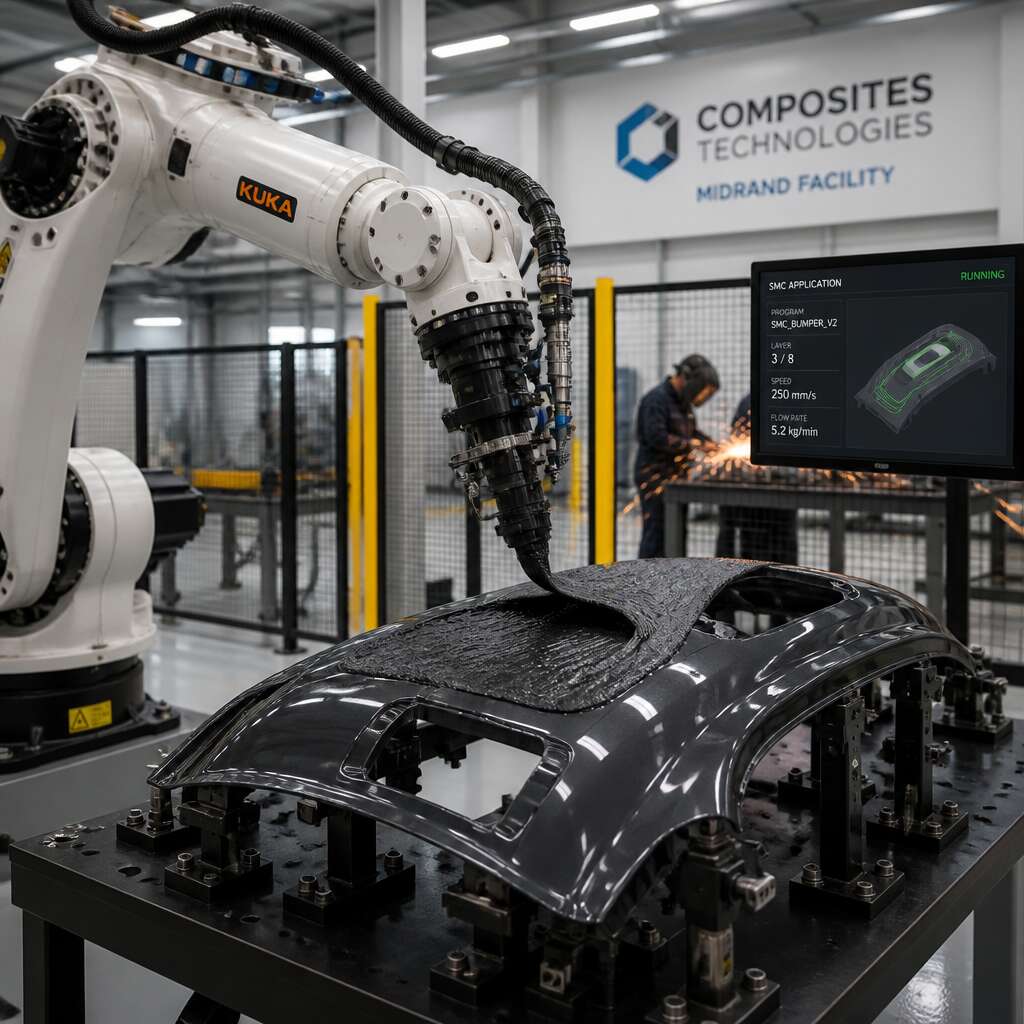
The Growing Demand for Composite Materials in South Africa
Why Industries Are Shifting to Sheet Moulding Compounds
South Africa’s manufacturing sector is changing course. Composite consumption has climbed roughly 8% year on year since 2018, driven by infrastructure renewal and energy projects. Industries that once defaulted to steel or aluminium now weigh fibre reinforced plastics for their corrosion resistance and weight reduction.
The move toward sheet moulding compound fabricators midrand reflects a practical reality. These specialists produce high volume components with precision, from electrical enclosures to automotive body panels. SMC offers dimensional stability that traditional materials struggle to match, particularly in harsh local climates.
Consider the advantages driving this adoption:
– Lower tooling costs compared to metal stamping
– Integration of multiple parts into a single moulding
– Consistent surface finish without secondary painting
Companies across Gauteng find that partnering with sheet moulding compound fabricators midrand shortens supply chains and eases import dependency. The result is a more resilient production ecosystem.
Key Applications in Automotive and Construction
South Africa’s ambition to build 1% of the world’s vehicles by 2035 puts pressure on every supply chain. That urgency explains why sheet moulding compound fabricators midrand are filling order books with automotive and infrastructure work. SMC battery trays, bumper beams, and underbody shields shrug off stone strikes and summer heat, a combination common on local roads.
Construction adds another layer of demand. Office blocks and data centres specify SMC for cable management, cladding, and fire rated doors. The reasons are straightforward:
- Mouldings arrive ready to install
- Tolerances hold under high humidity
- Surface finish eliminates painting schedules
UK buyers evaluating composite sources will find sheet moulding compound fabricators midrand competing on lead time against Asian exporters. ISO certified production and proximity to Johannesburg ports strengthen their case. The growth is steady, measurable, and tied to projects already under tender.
Midrand’s Strategic Position in Gauteng’s Manufacturing Sector
Gauteng generates roughly one third of South Africa’s GDP, and Midrand occupies the centre of that activity. Composite demand in the province has grown as infrastructure projects move from tender to site. The N1 corridor runs through Midrand, linking fabricators to Johannesburg, Pretoria, and OR Tambo International Airport.
Sheet moulding compound fabricators midrand benefit from a concentrated supplier base. Resin, glass fibre, and tooling services sit within a 30 kilometre radius, trimming inventory carrying costs. The provincial government has designated Midrand as a priority industrial node, which has encouraged factory expansions across the area.
- Industry data suggests composite consumption in South Africa grows by roughly 5 percent annually
- Midrand industrial parks report occupancy rates above 90 percent, signalling sustained manufacturing demand
For UK buyers evaluating sheet moulding compound fabricators midrand, I’d point to lead times and quality systems built for export.
How Local Fabricators Are Meeting Quality Standards
Demand for composite materials in South Africa is climbing in unexpected places. Mining houses now ask for SMC in cable trays and ventilation ducting, and agricultural equipment makers use it for shrouds that face constant chemical exposure and UV light. This creates a steady workflow for sheet moulding compound fabricators midrand, because the runs are shorter than automotive volumes but the engineering requirements are exacting.
For UK buyers, the encouraging part is how quickly local fabricators have tightened their quality systems. Many operate to ISO 9001 and TS 16949, and they use in-house optical scanners to verify part geometry against CAD data. One Midrand plant I visited holds tolerances of plus or minus 0.2 mm on a complex enclosure. That level of control explains why sheet moulding compound fabricators midrand are increasingly listed on UK supplier registers.
Evaluating a Composite Moulding Partner
Certifications and Compliance to Look For
According to a 2023 procurement survey, 68% of supplier audits fail due to documentation inconsistencies. When vetting sheet moulding compound fabricators midrand, I look beyond the glossy brochure and into the audit trail. Certifications prove process consistency, but only if they are current and unqualified.
- ISO 9001:2015 for quality management systems, with specific attention to corrective action logs.
- IATF 16949 if you operate in automotive supply chains; it demands rigorous failure mode analysis.
You also need to verify that these credentials cover the actual manufacturing site in Midrand, not just a corporate office elsewhere. Ask for the latest surveillance audit report! Check for environmental compliance, such as ISO 14001, because resin handling regulations are tightening across the UK and South Africa. A partner who cannot show raw batch traceability will struggle with liability claims later. Demand evidence of calibration certificates for their presses and ovens.
Assessing Production Capabilities and Lead Times
A 2024 sourcing report states that 41% of moulding project delays stem from overstated press capacity. When evaluating sheet moulding compound fabricators midrand, I start by walking the production floor. I check actual press tonnage against their quoted figures. I also verify cycle times for your specific part geometry, not their brochure benchmark.
Lead times hide in the queue. Ask for their current backlog and weekly output per press. A fabricator quoting eight weeks might have a two week buffer, or a six week bottleneck on tooling changes. Probe their raw material inventory levels for SMC resin and glass fibre! One missed delivery from a supplier can extend your timeline indefinitely.
For a quick capability assessment, request these numbers:
- Press force in kilonewtons
- Number of active moulds in rotation
- Average defect rate per batch
These metrics expose whether sheet moulding compound fabricators midrand can handle a 20,000 part order without slipping.
Material Expertise and Custom Formulations
A 2024 technical audit found that 58% of composite part failures trace back to resin chemistry, not press operation. When I evaluate sheet moulding compound fabricators midrand, I walk straight to their formulation lab. Fabricators who blend their own SMC paste consistently deliver tighter tolerance parts. Off-the-shelf compounds often misbehave on complex tool geometries.
I examine filler loading percentages and glass fibre wet-out. I scrutinise the thickener control, since viscosity drift ruins dimensional stability. I ask whether they test shelf-life limits on each batch. I even request their last twelve months of rheology curves! A moulder who understands thixotropic behaviour catches warpage issues before the tooling closes.
Managing Supply Chain and Logistics in Midrand
A single delayed resin shipment can idle a press line for a full shift. When I evaluate sheet moulding compound fabricators midrand, I spend as much time in their logistics office as on the shop floor. The best operators maintain buffer stock on critical materials like glass fibre and catalyst, and they track batch traceability from supplier to finished part.
Midrand’s position on the N1 and N4 corridors gives fabricators a genuine advantage for just-in-time delivery. But proximity means little without disciplined scheduling. I look for partners who run live inventory dashboards and who communicate transport delays before they become production problems.
- Ask about their supplier lead times for raw SMC paste
- Check whether they hold safety stock on hard-to-source additives
- Confirm their contingency plan for trucking strikes or fuel shortages
That level of scrutiny separates dependable sheet moulding compound fabricators midrand from those who simply quote competitive prices.
Track Record and Client Testimonials
Nobody brags about a supplier who simply delivers on time. The quiet reliability of a moulding partner shows up in reference calls, where clients describe problems solved rather than parts supplied. I evaluate sheet moulding compound fabricators midrand by how openly they discuss past failures with clients.
Testimonials matter when they mention measurable outcomes. Statements about dimensional stability, surface finish consistency, or cycle time improvements carry real weight. Vague praise about good service tells you nothing.
A few markers I check:
- Whether long term clients renewed contracts after pilot runs
- How quickly the fabricator resolved quality disputes
- Which tier one suppliers still send them repeat work
When a client describes a difficult program that this fabricator saved through honest communication, that is the endorsement worth trusting!
Inside the Sheet Moulding Compound Process
Raw Materials and Compound Preparation
Every tonne of sheet moulding compound begins with a precise balance of unsaturated polyester resin, calcium carbonate filler, and chopped glass fibre. The resin acts as the binding matrix, while the filler controls shrinkage and surface finish. Fibre length and loading directly influence mechanical strength, so fabricators calibrate these proportions against the final part’s duty cycle.
Compound preparation follows a staged sequence. The paste is mixed under vacuum to remove air pockets, then metered onto a carrier film. Glass fibre is deposited between two paste layers, and the sandwich passes through a compaction zone. This step sets the sheet’s thickness and wet-out, ensuring consistent moulding behaviour later.
For sheet moulding compound fabricators midrand, controlling viscosity and maturation time is critical. Ambient humidity in Gauteng can shift resin reactivity, so local teams adjust accelerator levels accordingly. A typical formulation checklist includes:
- Resin system and styrene content
- Filler particle size distribution
- Glass fibre type and silane coating
- Release agent and thickening agent ratios
Each batch is logged and tested for paste spread, fibre wet-out, and initial thickening. The result is a material that flows predictably under heat and pressure, which is precisely what moulders need to hit cycle times without defects.
Compression Moulding Techniques for Precision Parts
Compression moulding turns a flat charge of sheet moulding compound into a finished component in under three minutes. The charge, cut to a calculated weight and footprint, sits inside a heated steel tool. When the press closes, viscosity drops and the paste flows into every rib and boss. Pressure control matters more than raw tonnage.
For sheet moulding compound fabricators midrand, tool temperature management separates a glossy surface from porosity. We run tools at 140 to 150 degrees Celsius and monitor flow front progression on every trial. A balanced charge placement reduces knit lines and fibre washout.
Key variables during the press cycle:
- Closing speed, staged from fast approach to slow dwell
- Breathe cycles that vent trapped volatiles
- Dwell time calibrated to part thickness and resin reactivity
Each adjustment shifts the tolerance band. That is why we log every cycle rather than trusting memory. Get it right and the part releases cleanly every time!
Post-Moulding Finishing and Surface Treatments
A part that leaves the press at 150 degrees is not yet ready to ship. For sheet moulding compound fabricators midrand, post moulding finishing determines whether a component meets its specification. We start by trimming flash and locating pins, then move to surface preparation.
Most SMC parts need abrasion to promote paint adhesion. Sheet moulding compound fabricators midrand use media blasting or fine sanding to remove mould release residues. After that, a conductive primer is applied if the part will be painted. Our line includes a multi stage wash and a controlled drying oven.
- Deflash and gate removal
- Surface sanding with 400 grit
- Solvent wipe and adhesion promoter
- Primer or in mould coating
Every step is logged against the part number so we can trace any defect back to the moulding cycle. Some customers request a textured finish, which we achieve by etching the tool. That keeps the process repeatable.
Quality Assurance and Testing Protocols
Half a millimetre of deviation on a mounting flange can render a batch unsellable. That is why sheet moulding compound fabricators midrand treat quality assurance as a production stage, not a paperwork exercise!
Our in house laboratory checks density, hardness and impact resistance on every tenth moulding. Dimensional verification uses CMM equipment to compare live parts against the CAD model. Ultrasonic testing tracks internal porosity, and it catches voids that visual checks miss.
For structural components, we run destructive tests on sample parts from the same cycle. The results feed back into press parameters before the next run. Treating testing as reactive will always chase defects. We use it to correct the process itself.
Handling Complex Geometries and Tolerances
Getting a part out of the mould is easy. Getting one that holds complex geometry and tight tolerances takes control of every process variable. For sheet moulding compound fabricators midrand, the starting point is flow behaviour inside the cavity.
Deep draws and narrow ribs fill differently from flat panels. The charge must reach every corner before the material stiffens. We map the flow using mould filling simulations, then verify with short shots on the first trial.
Key factors that shape the outcome:
- Charge weight and placement pattern
- Temperature gradient across the tool surface
- Closing speed and pressure build-up
Each variable affects local shrinkage. A thick boss cools slower than a thin web, so the pressure in that zone determines whether the surface sinks. Tolerances on modern mounting features routinely sit at ±0.1 mm. Thermal imaging on trial parts shows exactly where adjustment is needed. That data feeds back into the process before production starts!
Cost Efficiency and Sustainability in Composite Fabrication
Understanding Pricing Structures
Pricing in composite fabrication depends on variables that are not always visible in a quote. For sheet moulding compound fabricators midrand, the final cost per part emerges from material yield, press utilisation, and post moulding work. A low unit price can hide expensive tooling amortisation or slow cycle times.
Sustainability also influences cost. SMC production generates minimal scrap compared to metal forming, and several Midrand fabricators feed offcuts back into secondary products. This lowers raw material spending and stabilises pricing across longer contracts. I have seen buyers focus on the per kilo rate, but the press time per part is where the real differences appear!
- Material grade and glass reinforcement content
- Tooling complexity and expected production volume
- Surface finish and painting requirements
- Batch size and scheduling flexibility
Buyers who understand these elements can evaluate quotes against actual production efficiency. When sheet moulding compound fabricators midrand combine energy efficient presses with closed loop material handling, the savings become measurable.
Reducing Waste Through Smart Material Use
Scrap in metal forming can reach 30 percent. Sheet moulding compound fabricators midrand often hold that number below 5 percent. Precise charge weight calculation and trimmed flash recovery keep expensive resin inside the part, not on the floor. Offcuts are granulated and returned to secondary mouldings, lowering raw material spend without changing structural performance.
Energy consumption rewards careful material handling as well. Presses running at full tonnage for short cycles use less power per part than extended dwell times. Monitoring energy per kilogram lets fabricators adjust heating profiles to match resin cure curves, reducing both expenses and emissions.
- Trim waste is returned to compounding.
- Defective parts are reground into filler.
- Scrap is sorted by glass content for reuse.
Midrand fabricators also log scrap sources to catch recurring defects. This data driven approach turns waste tracking into a profitability tool. Buyers who request waste reports can compare efficiency across suppliers, since material yield directly influences quoted prices. Sheet moulding compound fabricators midrand that share this information offer a transparent, cost stable partnership.
Recyclability and Environmental Impact
Composite scrap has historically been the sector’s dirty secret. Sheet moulding compound fabricators midrand now treat post industrial waste as a resource with measurable value. Thermoset recycling methods, such as pyrolysis and solvolysis, recover glass fibre and calcium carbonate filler from cured scrap, returning them to the manufacturing loop.
Energy recovery from non recyclable fractions offers another outlet. Some operations co process granulated SMC in cement kilns, replacing coal with a feedstock that provides both calorific value and mineral content. That cuts landfill burden while lowering the carbon intensity of unrelated industries.
- Closed loop regrinding for compression moulded parts
- Fibre length retention controls for secondary applications
- Mass balance tracking across production batches
Buyers evaluating environmental claims should ask for third party lifecycle data. The most credible sheet moulding compound fabricators midrand publish embodied carbon figures per kilogram of moulded output. That allows direct comparison with metal alternatives.
Energy Consumption in Press Operations
Pressing a sheet of SMC is a physics problem; it needs force and heat. Energy consumption in press operations typically exceeds every other overhead except raw materials. Sheet moulding compound fabricators midrand are tackling this with variable frequency drives on hydraulic pumps. These drives cut idle draw by up to 40%.
Thermal scheduling offers another saving. Keeping platens hot during downtime burns energy without producing parts. Moulders align cure cycles with production demand to flatten the load curve. They also route waste heat from hydraulic systems to pre-warm incoming compound.
- Servo-electric pumps sized to actual flow demand
- High-efficiency insulation blankets on hot platens
- Real-time energy monitoring per press cycle
These actions lower the cost per part, helping sheet moulding compound fabricators midrand compete with die casting on lifetime energy budgets.
Value Engineering for Long-Term Savings
Energy consumption is only one side of the ledger. The other side, waste reduction and material utilisation, determines whether a part actually earns its keep. Sheet moulding compound fabricators midrand are increasingly turning to value engineering to scrutinise every gram of material. They analyse fibre orientation, resin flow paths, and cure behaviour before the first tool is cut. This upfront analysis prevents expensive trial and error on the shop floor.
Value engineering in this context means questioning long held assumptions. A boss or rib that was always moulded in place might be better formed as a secondary operation. A thicker wall section might be replaced with a coring strategy that preserves stiffness while using less compound. These decisions are not theoretical. They show up directly in lower piece prices and shorter cycle times. For sheet moulding compound fabricators midrand, the discipline of value engineering turns a commodity material into an engineered solution.
Sustainability and cost efficiency are not competing goals in composite fabrication. They reinforce each other. Reduced material usage lowers the embodied carbon of each part. Less energy per cycle lowers the operational footprint. Waste material that is properly segregated can be recycled or repurposed. Every kilogram of material saved also reduces the load on logistics and landfill. The financial benefit is immediate.
Moulders also examine auxiliary processes with the same rigour. Trimming, drilling, and surface preparation consume energy and create waste. Sheet moulding compound fabricators midrand are using waterjet cutting as a single operation that replaces multiple mechanical steps. It leaves a clean edge and produces a recyclable slurry rather than mixed scrap. Fewer operations mean less handling, fewer tools to maintain, and shorter lead times.
The real gain comes from looking at the whole system rather than isolated variables. Moulders test different mould release systems to extend tool life. They adjust press parameters to reduce flash, which lowers secondary trimming. They track scrap rates by shift to identify training needs or maintenance issues early. These small measures compound over a production run, delivering savings that exceed any single technology upgrade.
A pragmatic approach to long term savings often involves revisiting the design of the part itself. A stiffening geometry that reduces material thickness by 1.5 millimetres saves weight and cost without sacrificing performance. Sheet moulding compound fabricators midrand bring this feedback to their clients early in the design phase, when changes are still inexpensive. This collaboration between moulder and designer is rare in the broader manufacturing sector, but it is becoming a defining feature of successful composite programmes.
Future-Proofing Your Supply Chain with Composite Innovation
Advanced Resin Systems and Additives
A 2023 survey found that 68% of manufacturers still cite material shortages as their top risk. For sheet moulding compound fabricators midrand, advanced resin systems offer a way to reduce that exposure. Toughened vinyl ester formulations cut cure times without sacrificing impact strength.
Additives can be selected to solve specific production bottlenecks:
- Shrinkage modifiers that reduce sink marks on thick sections
- Release agents that speed up demoulding
Those tweaks give buyers a buffer against raw material volatility. They also shorten production lead times, allowing fabricators to absorb sudden order changes. The result is steadier output, even when upstream pricing shifts.
Automation and Robotics in Moulding
A single unplanned press stoppage can erase a day of output. Automation has become essential for sheet moulding compound fabricators midrand. It buffers against labour shortages and fluctuating demand. Robotic handling removes variability from the moulding cycle, so every part leaves the press with the same fibre orientation and surface quality. Fewer rejected batches and less material waste follow.
Predictive maintenance on hydraulic presses adds another layer of protection. Sensors track temperature, pressure and cycle times, flagging anomalies before they become downtime. For sheet moulding compound fabricators midrand, this foresight keeps production schedules intact when suppliers falter.
Consider what automation replaces:
- Demoulding, which carries ergonomic risk and part variation
- Visual inspection, handled by camera systems with immediate feedback
- Inventory tracking, where bins and moulds self-report their status
The result is a dependable supply chain during disruption. When a customer changes an order, reprogramming a robotic cell takes minutes, not hours.
Lightweighting Trends Across Industries
A 10% reduction in vehicle weight delivers roughly a 6% gain in fuel economy. That arithmetic pushes lightweighting decisions into procurement offices and away from engineering silos. For sheet moulding compound fabricators midrand, the trend extends beyond automotive into rail carriages, marine hulls and wind turbine components.
Supply chain resilience comes from consolidation. A single SMC moulding replaces several welded metal components, cutting assembly time and trimming the supplier base. Tooling modifications take days rather than months, so output can track demand without holding excess stock. Industries adopting this logic share common drivers:
- Stricter emissions targets across the United Kingdom and Europe
- Rising energy costs that penalise heavier vehicles and structures
- End users demanding longer lifespans with lower maintenance burdens
For sheet moulding compound fabricators midrand, lightweighting is now a recurring specification across sectors. Fabrication capacity must match that pace.
The Local Outlook for Composite Manufacturing in Midrand
Weight reduction has moved from the engineering department into procurement strategy. Sheet moulding compound fabricators midrand are directly involved in that shift, because a single moulded component replaces several welded metal parts and removes assembly steps entirely.
What stands out locally is the production flexibility. Tooling modifications take days instead of months, so manufacturers can adjust to demand without carrying oversized inventories. In our conversations with procurement teams, that speed is the first thing they mention. Midrand’s position on the N1 corridor shortens freight routes to major industrial hubs, and the local technical workforce supports faster design iterations.
For supply chain planning, the decisive factors are:
- Lead time from design freeze to first article
- Consistency of mechanical properties across batches
- Ability to maintain production while making tooling changes
Those factors explain why Midrand’s fabrication sector is becoming a standard reference point in procurement strategy.



0 Comments